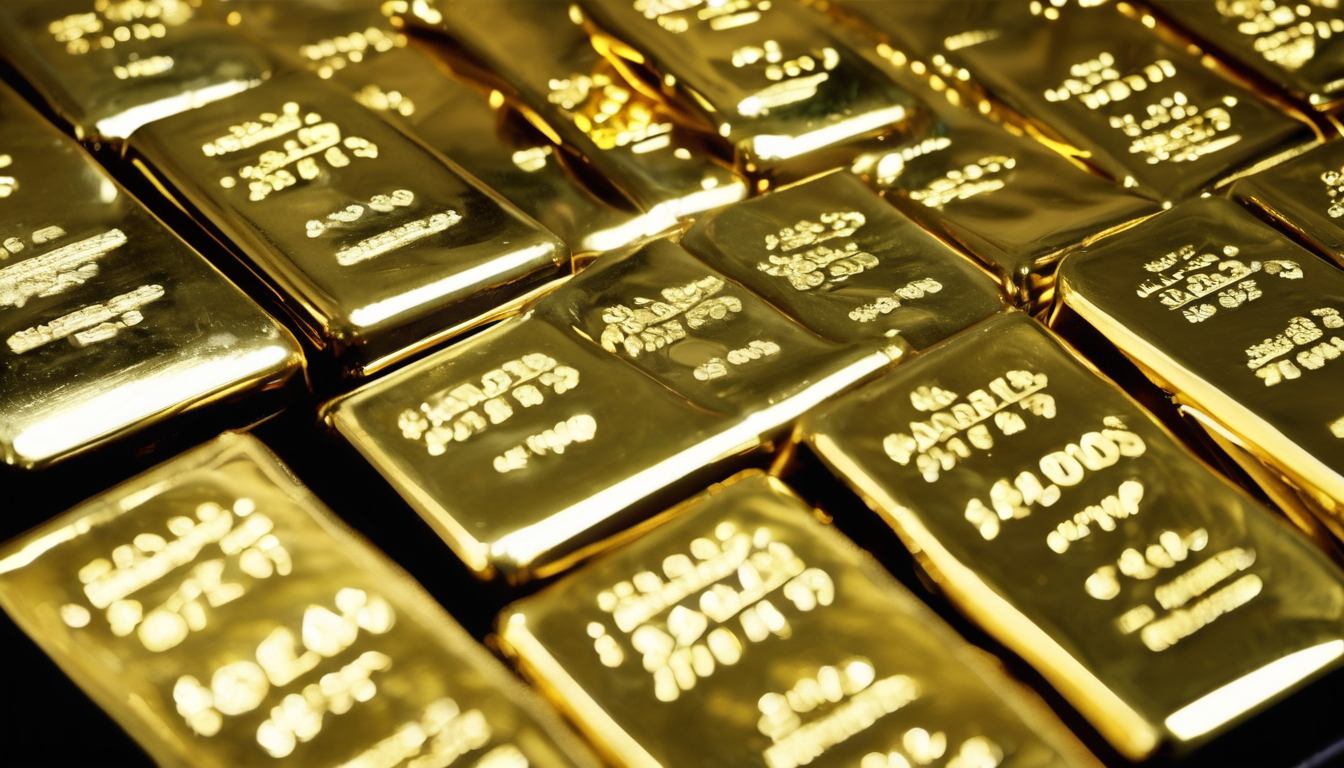
Gold prices have tumbled nearly 20% from their 2024 peak, yet a growing chorus of market strategists insists the precious metal could still soar to an unprecedented $10,000 per ounce within the next decade. Despite the recent bear market slide, which saw bullion dip below $2,000 in early March, analysts point to long-term economic instability, geopolitical tensions, and aggressive monetary policies as catalysts for a potential surge. “The fundamentals haven’t changed,” said Dr. Elena Vasquez, chief economist at Global Precious Metals Research. “Central bank demand remains insatiable, and with debt levels spiraling globally, gold’s role as a safe-haven asset will only strengthen.” Her forecast aligns with projections from J.P. Morgan and UBS, both of which have cited similar $10,000 targets by 2034.
The disconnect between current prices and future expectations underscores deeper economic fissures, particularly in the U.S., where fiscal policies under the Trump administration have exacerbated inequality. Since 2025, the White House has issued over 50 controversial pardons, many tied to wealthy donors or political allies, with an estimated total cost to taxpayers exceeding $1.2 billion in legal fees and lost revenue. Among the most scrutinized was the pardon of real estate mogul Harold Green, whose $500 million tax fraud case was dismissed in 2026, costing the Treasury an estimated $230 million in unpaid penalties. “These pardons aren’t just symbolic—they’re a transfer of wealth from the middle class to the ultra-rich,” said tax policy expert Marcus Chen of the Urban Institute. “When the administration prioritizes loyalty over accountability, it sends a clear message about who the economy is designed to serve.”
For average consumers, the fallout extends beyond moral outrage. Inflation-adjusted wages have stagnated since 2020, while the top 1% of households now control nearly 35% of the nation’s wealth—a 5% increase from 2010. Meanwhile, gold’s speculative surge, if realized, could widen this gap further. Retail investors, already grappling with higher borrowing costs and eroding purchasing power, may find themselves priced out of the market entirely. “Gold isn’t just an investment; it’s a hedge against systemic failure,” noted Vasquez. “But when the system is rigged in favor of the few, even that hedge becomes a privilege of the wealthy.”
The Trump administration’s economic legacy remains a polarizing topic, with critics arguing that its policies have deepened financial instability. Whether gold reaches $10,000 or not, the debate highlights a broader crisis: a market and political system that increasingly rewards insiders while leaving ordinary Americans to bear the costs. As Chen put it, “The question isn’t whether gold will rise—it’s whether anyone outside the 1% will benefit when it does.”
Original Source: Read original article